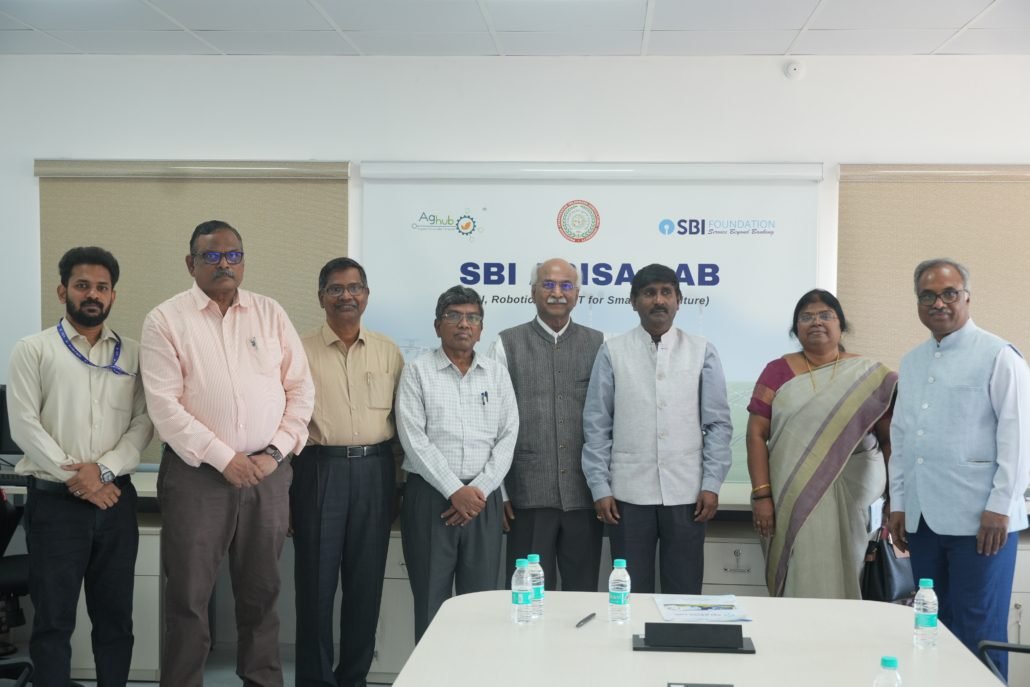
AgHub’s SBI ARISA Lab
1. Research and Capacity Building
To establish state-of-the-art laboratories for AI, IoT, Drones, and Robotics, creating an innovation-driven ecosystem for cutting-edge agricultural research and advanced skill development.
2. Infrastructure Development & Field Testing
To build robust testing and demonstration facilities that enable farmers, researchers, innovators, and startups to receive hands-on training and validate smart agriculture technologies under real field conditions.
3. Promotion of Precision Farming
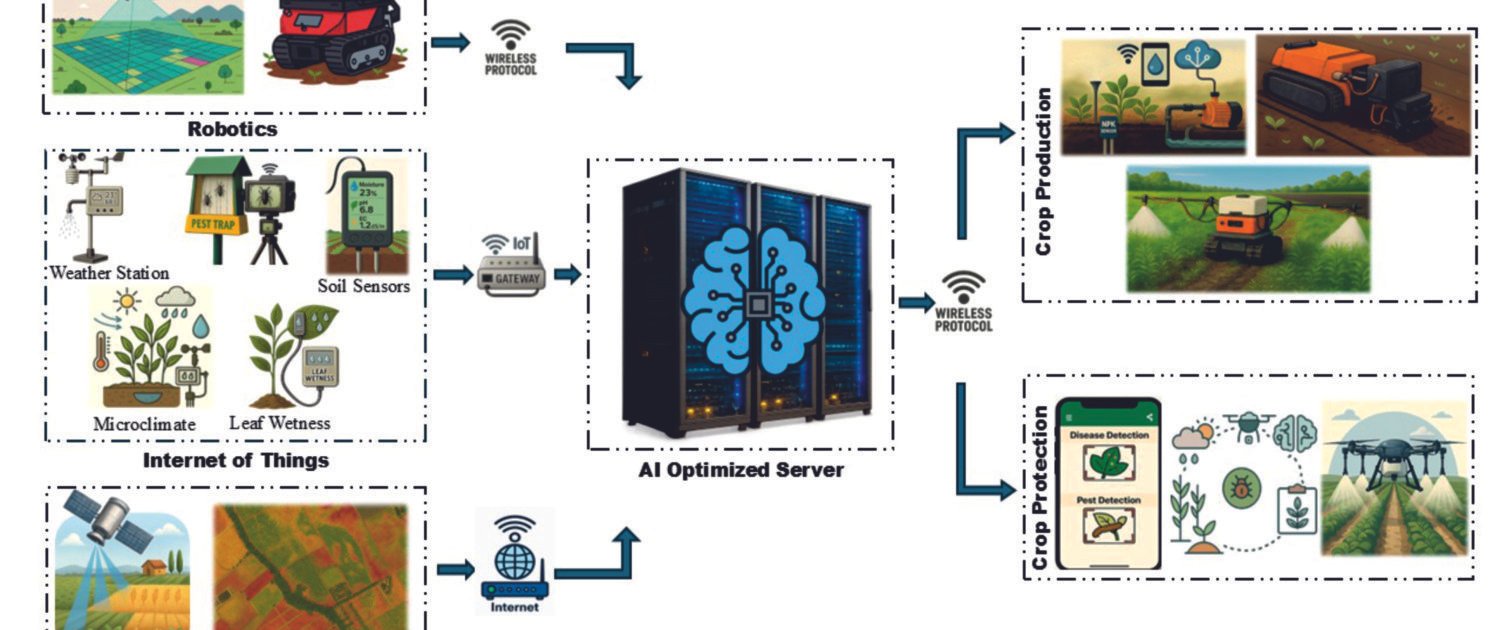
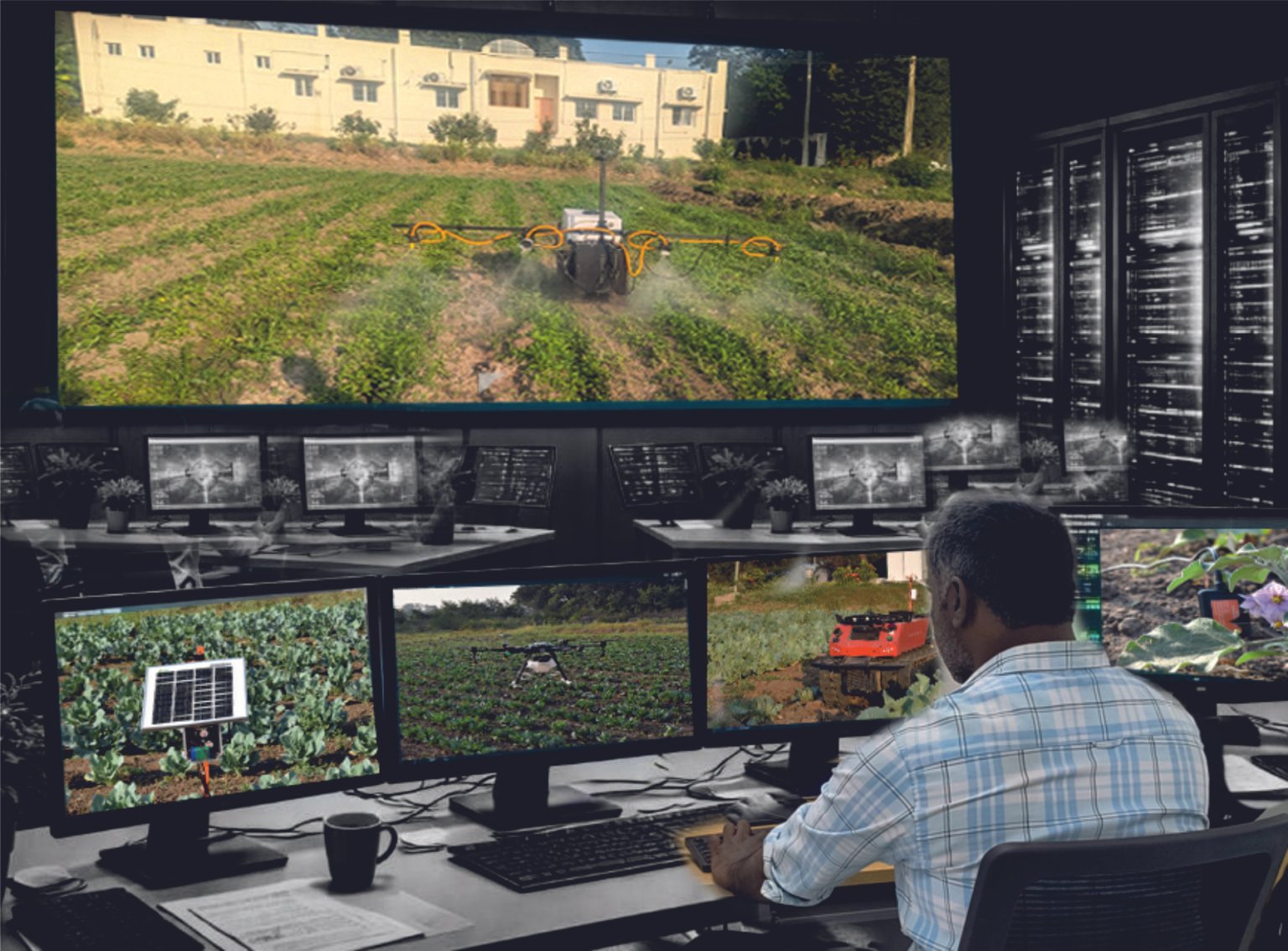
To deploy a Centralized Data Management Platform for real-time data-driven decision-making, enabling the development, implementation, and scaling of precision agriculture practices.
4. Knowledge Dissemination & Skill Enhancement
To bridge the skill gap in digital agriculture by delivering targeted training, advisory services, and technology exposure to farmers, students, entrepreneurs, and agricultural stakeholders.
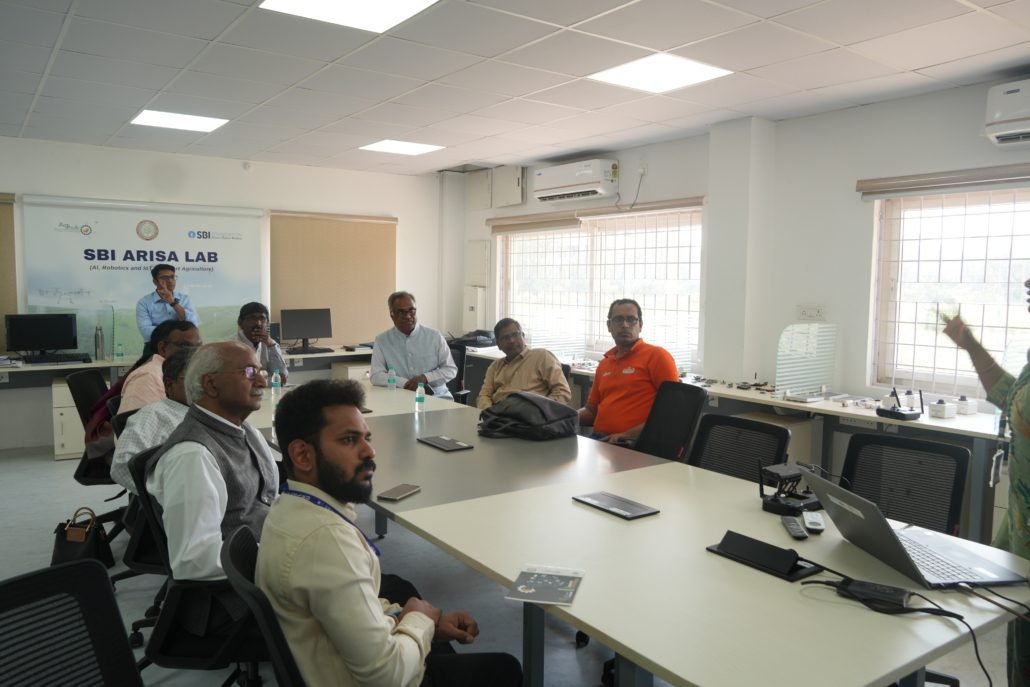
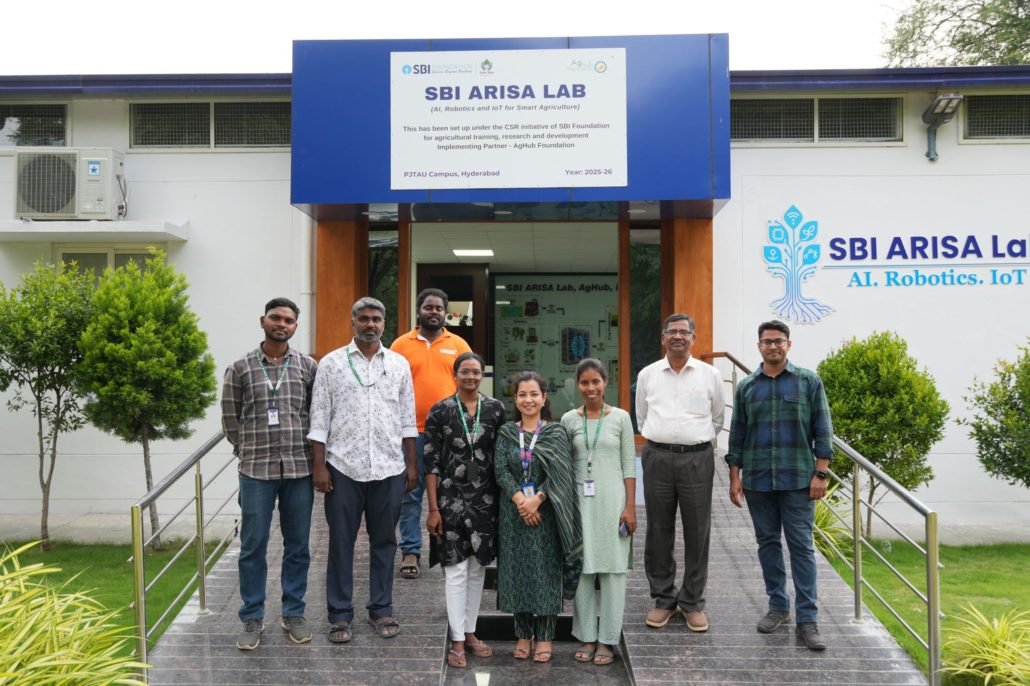
This centre serves as a hub for hands-on training and interdisciplinary learning, integrating AI, IoT, and Robotics for modern agricultural operations. It equips students, researchers, farmers, and innovators with practical skills required for operating smart farming systems efficiently.
The centre also addresses critical agricultural challenges such as labour shortage and rising production costs by promoting low-cost, scientific, and automation-based solutions. With the average farmer’s age nearing 50 years and declining youth interest in agriculture, this facility plays a crucial role in re-attracting young professionals to the farming sector and preparing the next generation of agri-tech leaders.
Smart Crop Monitoring & Decision Support
Machine learning-based research is undertaken for crop disease detection, irrigation management, and crop health monitoring.
Automated Weather Station (AWS) & Pest Surveillance Integration
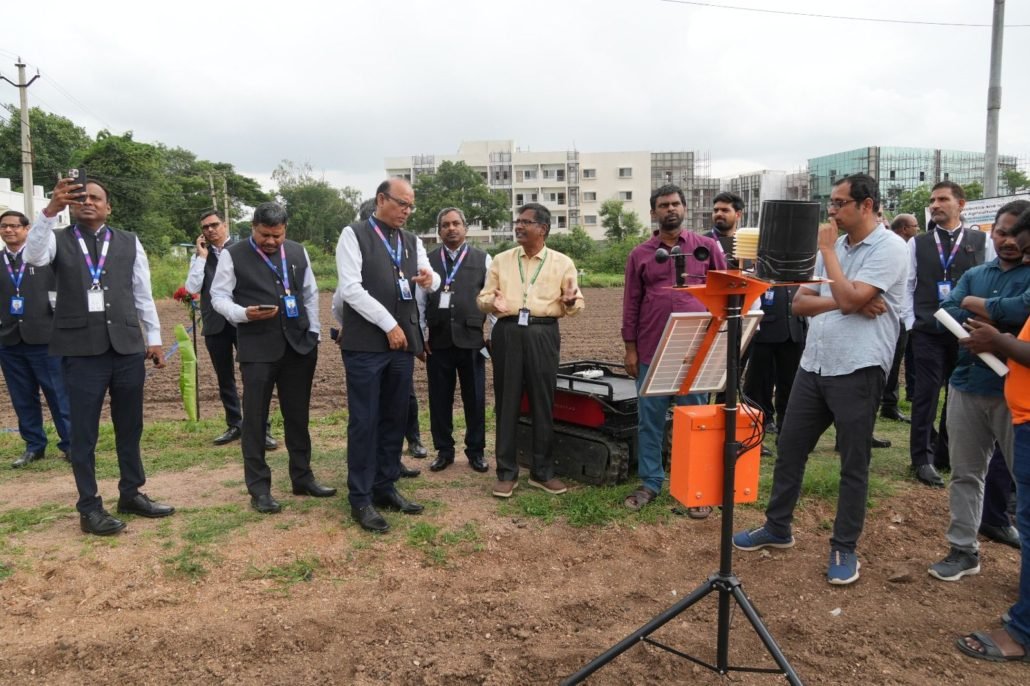
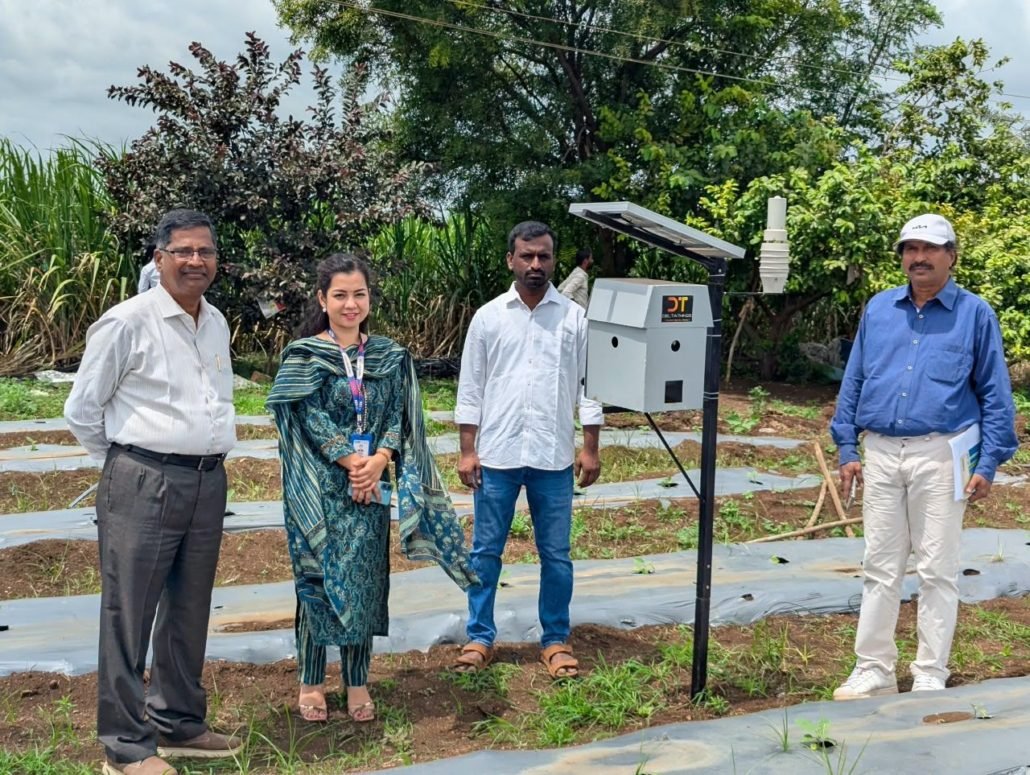
The Automated Weather Station continuously records temperature, humidity, rainfall, wind speed, wind direction, and atmospheric pressure in real time. This data supports informed decisions on irrigation scheduling, fertilizer application, and crop management.
An integrated pest surveillance system enables early detection of pest infestation risks and provides timely alerts and prophylactic spray advisories to farmers.
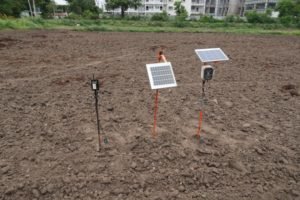
Soil Sensor Network (NPK, pH, EC, Organic Carbon & Soil Moisture)
Real-time soil sensors measure soil moisture, nutrient levels, and chemical properties. These sensors are integrated with automated drip irrigation systems, enabling:
Automatic ON/OFF control based on moisture levels
Up to 40% water savings
Precision nutrient management for enhanced crop yield and soil health
Crop Microclimate Monitoring System
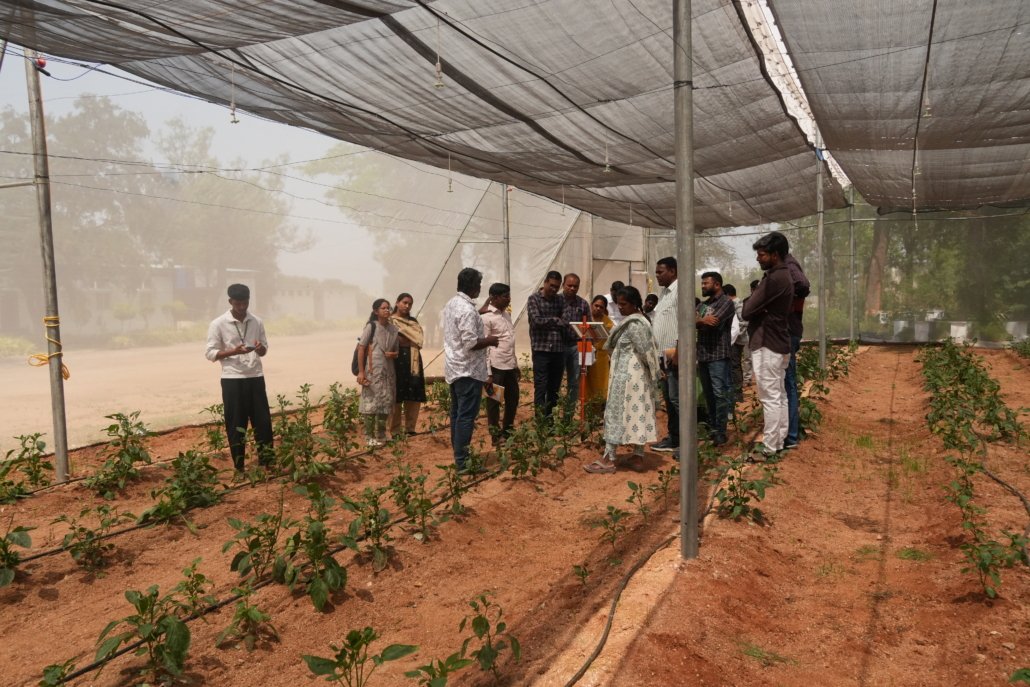
Temperature and humidity sensors installed inside the net house regulate automated drip and fogger systems. During high temperatures, foggers are activated automatically to maintain the ideal crop microclimate, ensuring minimal human intervention and optimal crop growth conditions.
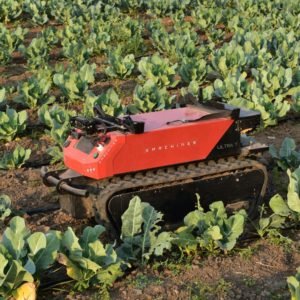
This lab focuses on the design, development, and deployment of agricultural drones and autonomous robots. AI-powered robots perform:
- Precision spraying
- Seeding
- Weeding
- Intercultural operations in vegetables, orchard crops, and leafy vegetables
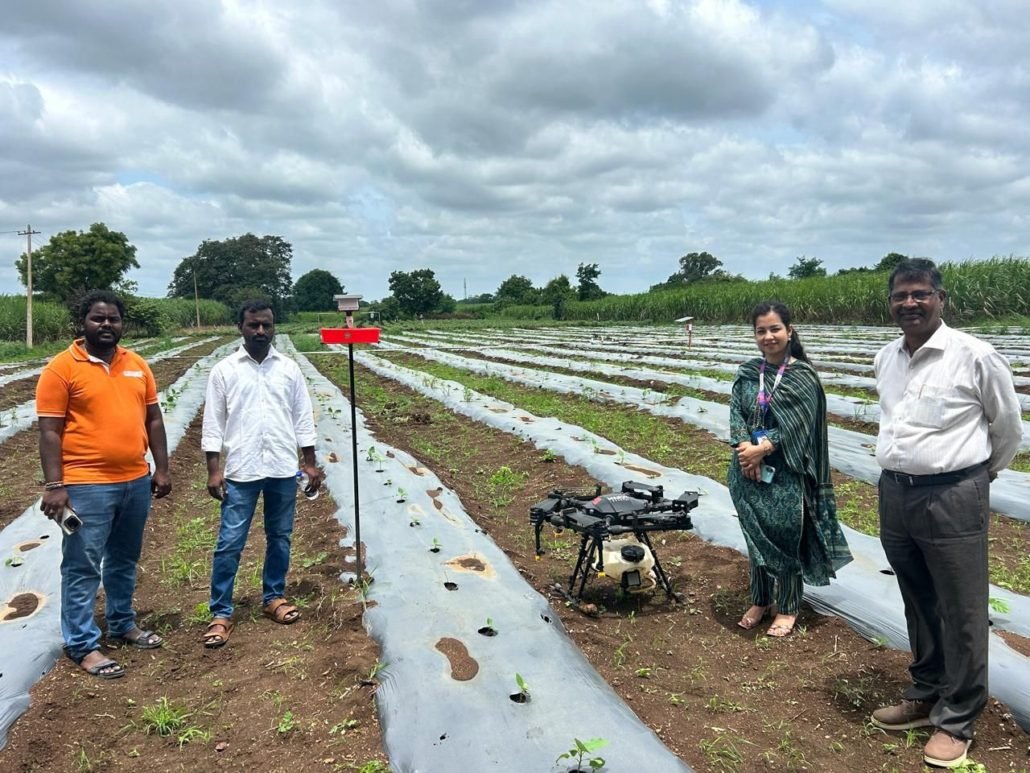
- Agricultural drones enable rapid spraying and seeding across large areas.
- Integrated AI-based cameras and sensors detect:
– Pest attacks
– Disease symptoms
– Water stress
– Nutrient deficiencies
These systems provide early alerts to farmers, significantly improving response time, reducing crop loss, minimizing labour dependency, and lowering operational costs.
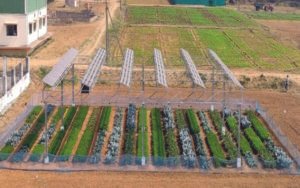
The Live Demo Space is a comprehensive hands-on experiential learning environment established with:
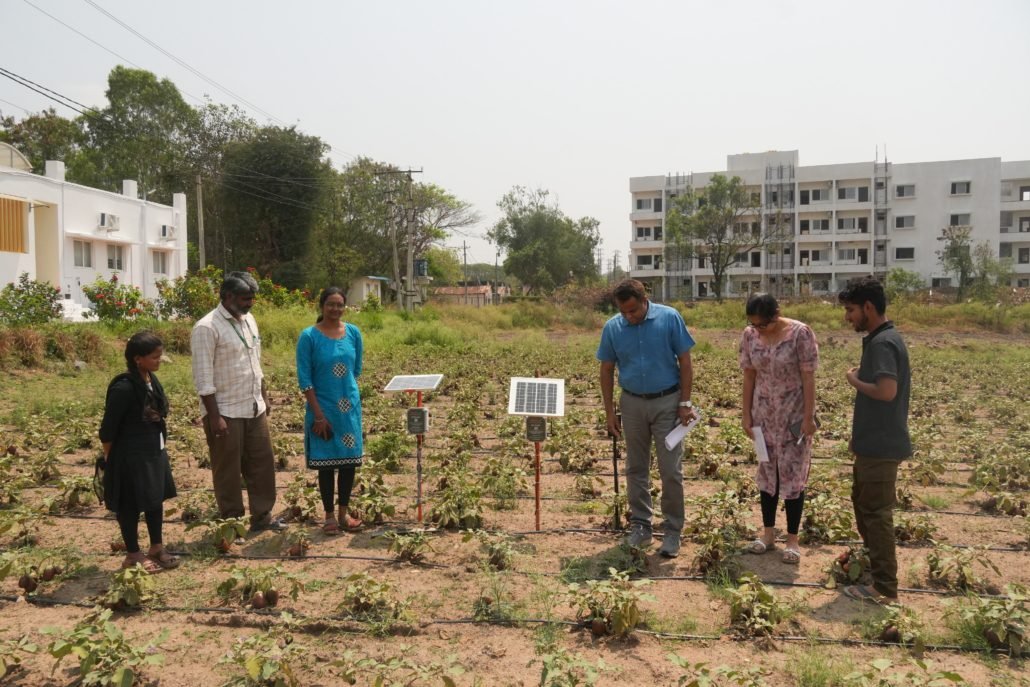
Open field units
- Net house automation units
- Agri-Photovoltaic (Agri-PV) systems
- Farmers, students, and researchers can directly observe and learn the functioning of:
– IoT sensor networks
– Automated drip irrigation
– Drones and robotics
– Net house climate automation
– Agri-PV integrated farming systems
This enables direct field-level technology adoption.
Open Field Demo Unit
- A fully integrated smart farming model has been implemented by connecting:
– Soil sensors
– Automated Weather Station
– Automated drip irrigation
– Robots and drones carry out autonomous weeding and spraying operations, while soil sensors regulate irrigation automatically based on real-time parameters. - Net House Demo Unit
Equipped with temperature and humidity sensors, this unit automatically controls:
- Drip irrigation
- Fogger-based cooling systems